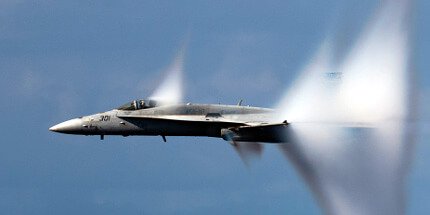
Maximum Helicopter Speed
The speed of a typical helicopter rarely exceeds 200–300 kilometers per hour. Even military helicopters, for which flight speed can be critically important, rarely accelerate above 350 kilometers per hour.
It seems there’s a limit beyond which they cannot fly faster. There is indeed a limit.
Why is that, and what’s the reason? It all comes down to the main difference between a helicopter and an airplane. An airplane’s wing is fixed, while a helicopter’s wing rotates—it’s the main rotor.
If an airplane’s wing moves at the same speed as the aircraft relative to the airflow, in a helicopter, one half of the rotor moves faster, and the other slower.
How Fast Does a Helicopter Fly?
| Parameter | Mi-8 | Bell UH-1 Huey | UH-60 Black Hawk | SA 330 Puma |
|---|---|---|---|---|
| Cruising Speed* (km/h) | 225 | 204 | 282 | 257 |
| Maximum Speed (km/h) | 250 | 217 | 296 | 280 |
| Maximum Takeoff Weight (kg) | 12,000 | 4,309 | 9,979 | 7,400 |
| Flight Range (km) | 500 | 511 | 584 | 570 |
| Main Rotor Diameter (m) | 21.29 | 14.63 | 16.36 | 15.00 |
| Rotor Speed (RPM) | 192 | 324 | 258 | 265 |
*Typically, maximum speed is only 5–10% higher than cruising speed.
A helicopter’s rotor has two speeds:
- Angular speed of rotation — how many revolutions per minute the rotor makes.
- Linear speed relative to the airflow — the speed at which air flows over the blade.
The blade moving in the direction of flight is called the advancing blade (green arrow), while the one moving in the opposite direction is the retreating blade (yellow arrow).
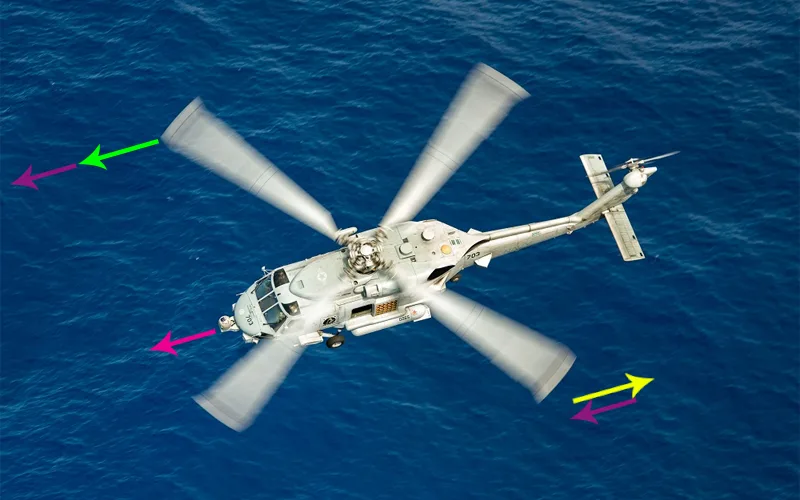
The airflow speed over the advancing blade is the sum of the blade’s speed and the helicopter’s speed (purple arrow). For the retreating blade, it’s the difference between the helicopter’s speed and the blade’s speed.
The problem for increasing flight speed lies precisely with the advancing blade.
Let’s do some basic high-school math.
Calculating Helicopter Speed
Angular speed is straightforward: more throttle means the shaft spins faster. But linear speed is calculated as follows:
V = ωR
That is, angular speed multiplied by the radius. In our case, this is the length of the blade.
Calculating the speed at the tips of the rotors for all four helicopters mentioned above yields interesting results. First, we need to convert the rotor speed from revolutions per minute to radians per second and, of course, divide the rotor diameter by two to get the radius.
- Mi-8: 20.11 rad/s
- Bell UH-1 Huey: 33.93 rad/s
- UH-60 Black Hawk: 27.02 rad/s
- Aérospatiale SA 330 Puma: 27.75 rad/s
Now we calculate the required speed:
- Mi-8: 20.11 × 21.29/2 =
- UH-1 Huey: 33.93 × 14.63/2 = 248.2 m/s
- UH-60: 27.02 × 16.36/2 = 221 m/s
- Puma: 27.75 × 15/2 = 208.1 m/s
This gives us the speed at the blade tips when the helicopter is hovering and not moving. Now, if we add the maximum speed for the advancing blade:
- Mi-8:
- UH-1 Huey:
- UH-60:
- Puma:
The speed of sound at an altitude of 3 kilometers, where helicopters typically fly, is 1,183 kilometers per hour or 328.6 meters per second.
Unpleasant phenomena related to supersonic airflow begin at a speed of 0.8 Mach, or 80–85% of the speed of sound, which is roughly 1,000 kilometers per hour.
Here it is—the speed limit we were looking for, just like for an airplane: the speed of sound.
Helicopter Speed Limitation
A helicopter’s rotor must not spin faster than 80% of the speed of sound at a given altitude, or shock waves will form, drag resistance will spike, and vibrations will occur…
As a result, the blade could break off, and the helicopter could lose control—a highly dangerous situation.
The maximum speed of a helicopter is limited by its design and physics. The rotor’s speed relative to the air must not even approach the speed of sound.
A helicopter’s maximum speed cannot exceed the difference between the speed at the blade tips and the critical speed of sound. Simply put, a helicopter cannot fly fast precisely because its rotor spins fast too.
Of course, there are tricks to delay the onset of the “shock wave crisis” and fly a bit faster:
- Special blade tips that alter airflow, similar to how aircraft wings increase sweep. Helicopter blades are designed with “swept” shapes.
- Using supercritical (very thin) blade profiles.
- Ultra-smooth composite materials that slightly change the airflow over the blade.
- Reducing rotor speed or flight speed—the most effective method.
This means that for any helicopter, the maximum speed cannot exceed a certain value. A supersonic helicopter is fundamentally impossible.
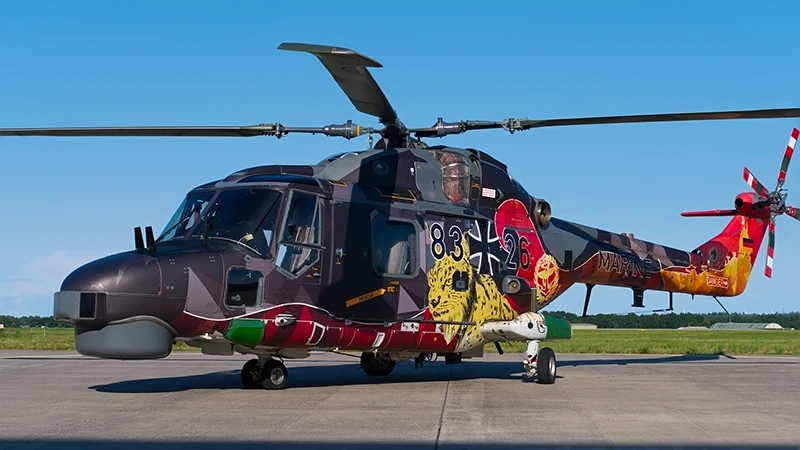
Westland Lynx — the fastest classic helicopter. Equipped with special BERP blade tips
You cannot drastically reduce rotor speed, or the helicopter will simply descend to the ground. Aerodynamic tweaks can enable normal flight at a Mach number slightly above critical, but no one has managed to exceed 0.95 Mach for the rotor blade.
When the advancing blade enters transonic mode, the retreating blade remains subsonic, leading to vastly different drag and lift forces on the left and right sides.
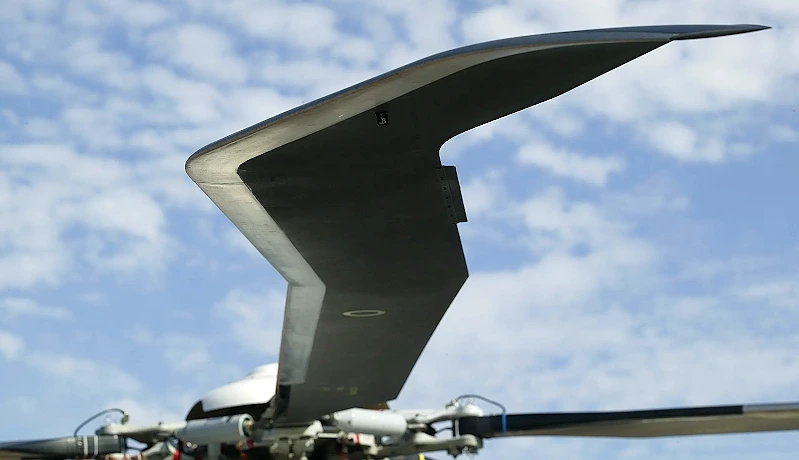
Engineers try to mitigate the effects of supersonic airflow, just like increasing the sweep of an airplane wing, by increasing the sweep of the rotor blades
For specially prepared helicopters designed for speed records, the speed has not exceeded 400 km/h. A civilian helicopter’s honest speed is 250 kilometers per hour. Even for military helicopters, flying faster than 300 kilometers per hour is not feasible.
Can a Helicopter Fly Faster?
There’s only one way for a helicopter to fly faster than its limit: stop being a helicopter.
Such experimental non-helicopters already exist—tiltrotors and hybrid helicopters.
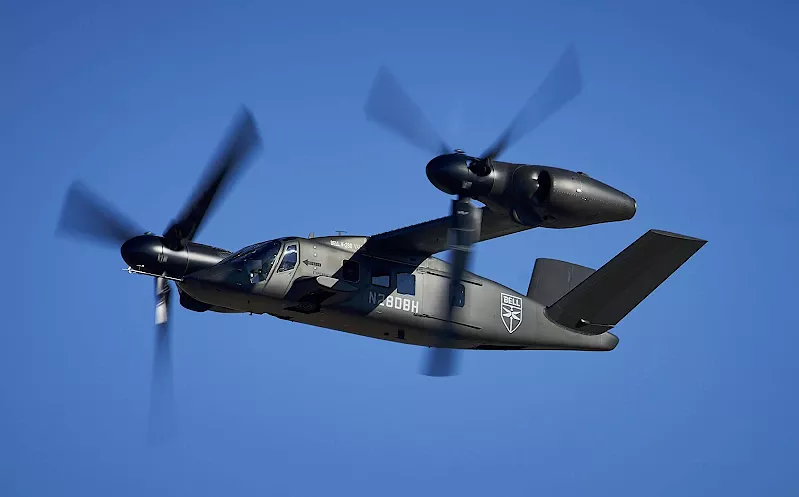
V-280 Valor
Tiltrotors, of course, are faster than helicopters because they fly like airplanes, using wings to generate lift.
For takeoff and landing, the tiltrotor’s propellers tilt upward. A cruising speed of 520 kilometers per hour is normal for a tiltrotor, but for a helicopter, such a speed is pure fantasy.
Experimental Helicopters
Back in 1967, the AH-56 Cheyenne helicopter made its first flight. Its horizontal flight speed reached 407 kilometers per hour thanks to two tail rotors: one conventional, located on the side of the tail boom, and a second pusher rotor that added 100 kilometers per hour to the maximum speed.
The Cheyenne, like its competitor in the competition, the S-67 Blackhawk, had wings that were supposed to generate lift at high speeds, similar to an airplane.
At the time, this concept seemed very promising.
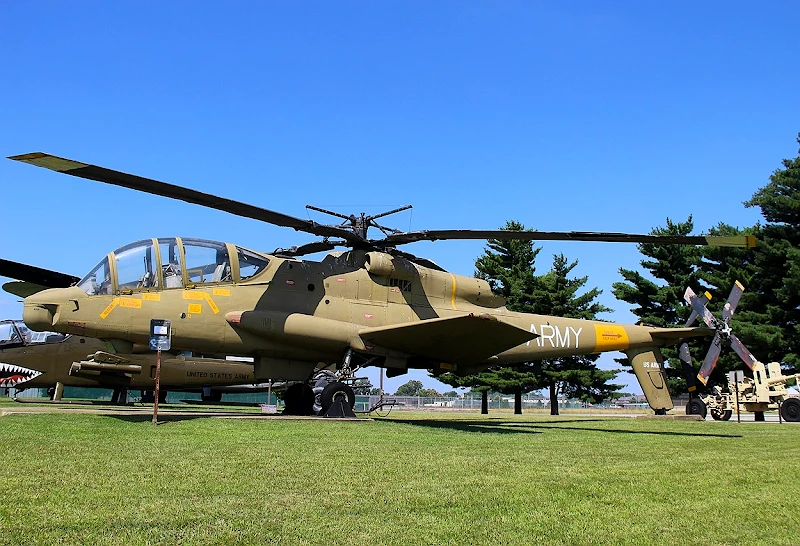
AH-56 Cheyenne — Lockheed’s experimental helicopter
But engineers couldn’t overcome poor handling and vibrations caused by the use of a rigid rotor.
Typically, a helicopter’s blades are connected to the shaft via a hinge, allowing them to stabilize in flight. But at higher speeds, hinged connections must be abandoned, or the blades could break off.
In the Cheyenne project, creating a rigid rotor without dangerous vibrations proved impossible.
The Piasecki X-49 SpeedHawk, a hybrid of an airplane and a helicopter, has a pusher propeller and a wing that provides lift at higher speeds, allowing the rotor speed to be reduced without falling. It made its first flight in 2007 but never reached the claimed speed of 400 kilometers per hour.
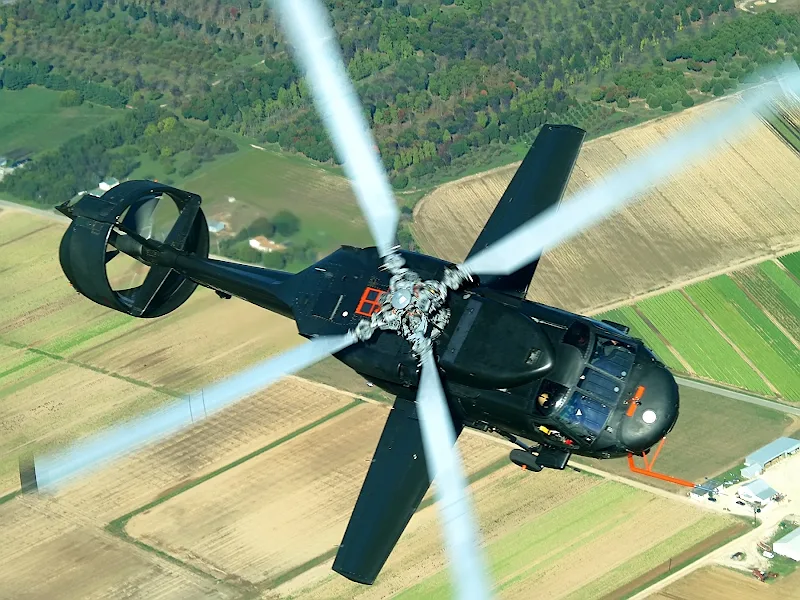
Piasecki X-49 SpeedHawk — another experiment
The Eurocopter X3, in 2013, managed to reach an unprecedented 472 km/h. At this speed, the main rotor blade tips hit 0.91 Mach, or 91% of the speed of sound.
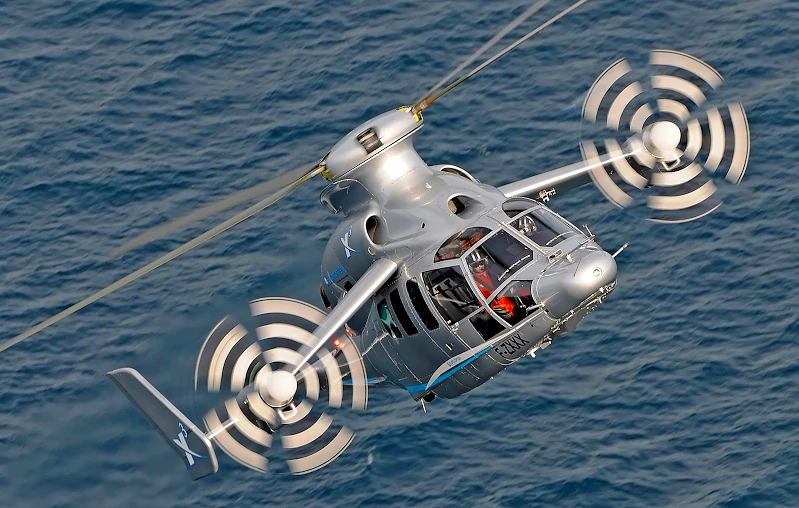
Eurocopter X3
The experimental Sikorsky helicopter X2 achieved a speed of 474 kilometers per hour, while its successor, the S-97, was less fast, with a cruising speed of 410 kilometers per hour. The pre-production SB-1 Defiant reached 437 km/h. However, the competition for which the SB-1 was developed as a prospective high-speed aircraft was canceled.
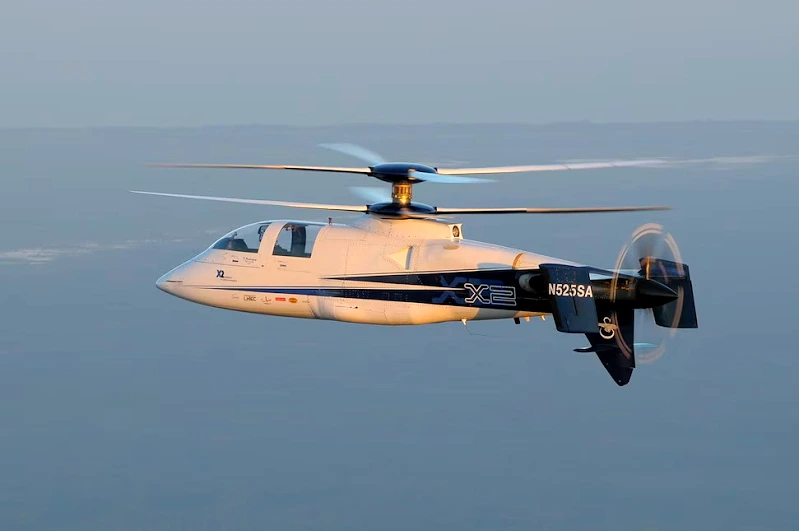
Sikorsky X2
Sikorsky’s machines also use a rigid rotor and a pusher propeller, but there’s no wing for lift.
As speed increases, the rotors simply spin slower while still functioning as a wing.
A coaxial rotor system is used—two rotors spinning in opposite directions.
Engineers managed to achieve high structural rigidity, preventing blade overlap, which allows the rotor height to be reduced, lowering drag and positively affecting rigidity.
The swashplate is entirely absent; only the rotating rotor principle remains from the helicopter. This is a completely new class of aircraft.
For helicopters to fly faster, they must fundamentally change. Engineers are ready for this, but customers—both military and civilian—are not yet ready. The technology has long been available.