What is a logarithm
But in fact, it’s important and even interesting. Logarithms are found everywhere, from the radio signal in a Wi-Fi router to the shell of a snail.
What is a logarithm in simple terms
A logarithm is the inverse operation of exponentiation. It’s that simple. There’s multiplication and division, and there’s exponentiation and logarithm.
In simple terms, a logarithm answers the question: “to what power must a number be raised to get the desired result”.
For example: log₂(8)=? means we are looking for the power to which 2 must be raised to get 8. log₂(8)=3 because 23=8.
If you still don’t understand what a logarithm is and why it’s needed, you’re not alone. Logarithms are not an intuitive operation, and for a long time, mathematicians didn’t use them at all.

A snail’s shell — is a logarithmic spiral
History
Before the invention of logarithms, life for mathematicians (and anyone who had to do a lot of calculations) was tough.
Multiplying and dividing large numbers, extracting roots, and raising to powers was very, very labor-intensive. Many operations had to be repeated multiple times.
Who invented the logarithm
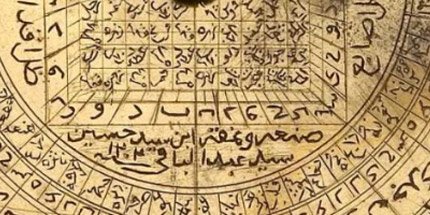
Logarithms were invented by the Scottish mathematician John Napier in the early 17th century. He wrote a treatise called “A Description of the Marvelous Rule of Logarithms”. In this work, he showed how to turn multiplication into addition and division into subtraction using logarithms.
How? Instead of multiplying two large numbers, you need to:
First, find their logarithms. Then add them. And then use the inverse transformation to get the result.
For example: you need to multiply two numbers, 1234 × 5678.
Multiplying by hand requires many operations. It’s time-consuming, and there’s a risk of making a mistake. You can calculate it right now; the result will be 7006652.
In fact, it takes 28 multiplication and addition operations to multiply two four-digit numbers.
Here’s how it can be done with logarithms:
1. Calculate the decimal logarithms of each number:
log10(1234) ≈ 3.0913
log10(5678) ≈ 3.7542
2. Add the logarithms:
3.0913 + 3.7542 = 6.8455
3. Find the number corresponding to the logarithm 6.8455.
106.8455 (ten to the power of 6.8455) ≈ 7006652
That’s how “simple” it is. Only 3 steps instead of 28!
But how do you answer the question, to what power must 10 be raised to get 5678? How do you even calculate that? Has it become easier?
Very simple. Napier created logarithmic tables. That is, he calculated everything in advance. His treatise included logarithms of sines, cosines, and tangents, which were needed by astronomers.
Napier’s Bones
Another of Napier’s inventions can be called the first calculator. The famous Napier’s Bones (or Napier’s Rods) were a set of a board and sticks with values that allowed multiplying and dividing nine-digit numbers.

You just had to arrange the sticks on the board correctly and count the digits in the right row.
For example: to multiply 836 by 3, you need to arrange the sticks numbered 8, 3, 6 and look at row 3.

Read the sums in the diagonals from right to left:
- The rightmost number is 8
- Add the digits in the second diagonal from the right — 9+1 = 10. Write down zero and carry 1 to the left
- Add the digits in the next diagonal — 4+0+1 (add the carried-over one from the left diagonal)
- The last diagonal is 2
Answer: 836 × 3 = 2508
In fact, this is lattice multiplication or the Indian multiplication method. It’s just pre-calculated, and you only need to arrange the “sticks” correctly.
In essence, Napier’s Bones are a multiplication table in a different form. It replaces multiplication (pre-calculated) with addition. The only problem is that multiplying is convenient and fast, but dividing is not.
Logarithmic Table
Napier’s method of pre-calculating everything was immediately warmly received by the entire scientific community. Many mathematicians began creating their own logarithmic tables.
How a logarithmic table works:
For example, you need to multiply two numbers: 120 × 23.
| Number | log₁₀ (number) |
|---|---|
| 1.00 | 0.0000 |
| 1.10 | 0.0414 |
| 1.20 | 0.0792 |
| 1.30 | 0.1139 |
| 1.40 | 0.1461 |
| 1.50 | 0.1761 |
| 1.60 | 0.2041 |
| 1.70 | 0.2304 |
| 1.80 | 0.2553 |
| 1.90 | 0.2788 |
| 2.00 | 0.3010 |
| 2.10 | 0.3222 |
| 2.20 | 0.3424 |
| 2.30 | 0.3617 |
| 2.40 | 0.3802 |
| 2.50 | 0.3979 |
In the table, find the corresponding decimal logarithms:
- 120=1.20×10² — log₁₀(1.20) = 0.0792
- 23=2.30×101 — log₁₀(2.30) = 0.3617
Apply the remarkable property of logarithms that Napier wrote about:
log(ab)=log(a)+log(b) — the product of two numbers equals the sum of their logarithms!
Just don’t forget to add the powers, because the table used different numbers:
- log(120)=0.0792+2=2.0792
- log(23)=0.3617+1=1.3617
Add them:
2.0792+1.3617=3.4409 — this is the power of the number 10.
103.4409= ?
You need to look at the logarithm table again to find out that:
103.4409 ≈ 2759
The exact value of 120 × 23 = 2760; using the logarithm table results in an error, but it was a small price to pay for simplifying calculations significantly.
That is, using the properties of logarithms, you can replace complex and tedious multiplication with simple and fun addition! After all, multiplication is the same as addition! For example, 2 × 3 is the same as 2+2+2 or 3+3.
But you don’t have to limit yourself to multiplication alone; you can create logarithmic tables for other operations. For extracting roots, raising to powers, trigonometric functions, and much more.
Slide Rule
Moving further toward simplification. If you can pre-calculate the result of multiplication, you can do the same for any other complex calculations.
That’s how the slide rule was born.
A slide rule is also a calculating machine. If you take two rulers, mark values on them, and move them relative to each other, you can perform quick calculations!

Like with the table, all values are pre-calculated. Only instead of numbers, divisions on a scale are used.
Using a slide rule is simple. For example, to multiply two numbers:
- Align the start of the movable part of the ruler with the first number
- Find the second number on the movable part
- Look at the number opposite — that’s the result
You can also use such a ruler to:
- Multiply and divide
- Raise to powers and extract roots
- Multiply and divide by the number pi
- Find values of trigonometric functions
- Convert different units (e.g., feet to centimeters)
- Much, much more
It all depends on which scale markings are applied to the ruler. Very simple and very effective.
However, the accuracy of calculations is not that high due to limitations in the precision of the scale itself. It’s just very hard to distinguish small divisions by eye.
To enable multiplication, the scale of such a ruler is not linear as usual but logarithmic.
Logarithmic Scale
A logarithmic scale is a scale where each subsequent division is proportional not to a sum but to a product. In simple terms, on a linear scale, the divisions are familiar: 0, 1, 2, 3… That is, we add one each time.
But on a logarithmic scale: 1, 10, 100, 1000… That is, each subsequent value is not one but ten times greater!
The scale can be different. For example: 20 21 22 23 or 1, 2, 4, 8… That is, each division is twice as large as the previous one.
This is convenient when the difference between values is very large (or very small), and it’s important to see not how much larger it is, but how many times larger it is.
Why logarithms are needed
This mathematical operation is needed by everyone!
It was used in calculations when designing an ordinary car engine, for refining GPS coordinates in a phone, compressing images on this page, and building the sound scale in an audio player.
Even banks use logarithms when calculating compound interest.
A few examples of use:
- The speed of a rocket changes depending on its mass, following a logarithmic law. The famous Tsiolkovsky rocket equation includes a natural logarithm*
Δv = ve ln(m0/mf)
Where:
-
-
- Δv — change in velocity
- ve — exhaust velocity of the gas from the nozzle
- ln — natural logarithm
- m0 — initial mass of the rocket
- mf — final mass of the rocket (without fuel)
-
*The natural logarithm is a logarithm with base Euler’s number e (≈ 2.71). For simplicity, it’s written as ln instead of loge. The natural logarithm is used in the formula because the exponential function better describes the process of the rocket’s mass change.
- Sound volume is measured in decibels (dB). This is a logarithmic function. An increase of +10 dB means 10 times more power.
- In thermodynamics, the entropy of a system is related to logarithms; it measures the number of microstates using a natural logarithm.
- Image compression uses logarithmic brightness transformation. The human eye perceives brightness nonlinearly. Some details can be removed, and a person won’t notice, making the file smaller.
- GPS uses automatic gain control on a logarithmic scale and an algorithm called “Kalman filter” for more accurate positioning.
- Radio communication — the power of a radio signal is measured in decibel-milliwatts (dBm). This is a logarithm of watts. Wi-Fi is also radio… Signal strength is measured in dBm (decibel-milliwatts). For example, a 1000-fold reduction in signal strength is just minus 30 dBm. Thanks to logarithms, even huge differences in power can be represented conveniently on a short scale from 0 to −100 dBm.
- To calculate the half-life of any radioactive element, a natural logarithm is used. This is because the amount of substance decreases exponentially. And the natural logarithm is the inverse of the exponential function.
- Sound in a forest or light in water diminishes exponentially. Thus, a natural logarithm is needed to understand at what distance the sound volume drops by n times or at what depth the light intensity decreases by n times.
Logarithms in nature
It’s surprising, but logarithms are found in nature. More precisely, the exponential law is found there. And the natural logarithm is the inverse function of the exponential. For example:
- The population of animals or bacteria grows exponentially. If we want to calculate how long it will take for the number of animals to increase fivefold, we need a natural logarithm.
- In mollusk shells or sunflowers, logarithms can also be found. The shell grows in a logarithmic spiral. And the seeds in a sunflower are arranged in a logarithmic spiral to optimally fill the space.
- Our Milky Way galaxy has four arms, each of which is a logarithmic spiral.
- Cyclones and anticyclones also twist into such a spiral.

The shape of a cyclone is a logarithmic spiral
A logarithmic spiral is a spiral that increases its radius exponentially with each turn. The angle between the tangent to the spiral and the radius from the center is always the same, which is why it looks so harmonious.
Why do logarithms appear in nature? Because it’s advantageous.
The logarithmic spiral appears everywhere because it is the most optimal shape in terms of conserving energy and matter: it minimizes energy loss and maintains system stability. Here’s why:
- Each turn of the spiral is proportional to the previous one. This saves energy because the system doesn’t change shape when scaled.
- The angle between the radius and the tangent to the spiral remains constant, ensuring stability. In galaxies, this prevents gravitational collapse; in cyclones, it prevents chaotic swirling.
Why are logarithms so convenient?
Take a radio signal as an example. It’s known that radio waves weaken not linearly but according to a power law (intensity is inversely proportional to the square of the distance).
Logarithms make this relationship linear — and that’s convenient for calculations.
The same Wi-Fi router constantly solves the problem: should it increase or decrease the antenna power?
If calculations were done directly in watts, you’d have to deal with tiny values like 0.00000000002 watts (the average signal strength or −77 dBm). Logarithms solve this problem. Calculations become simpler.
Properties of logarithms
The properties that John Napier called marvelous look like this:
- loga(b x c)=loga(b)+loga(c) — that is, the product of two numbers is the same as the sum of their logarithms
- loga(b / c)=loga(b)-loga(c) — that is, the division of two numbers is the same as the difference of their logarithms
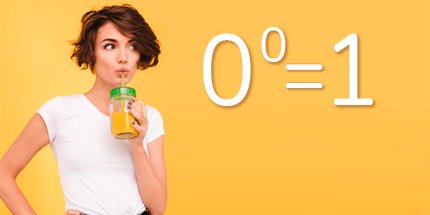
- loga(1)=0 — the logarithm of one is zero because any number raised to the power of zero is one. Even zero to the power of zero
- loga(a)=1 — the logarithm of the base is one. Because any number raised to the power of one is itself
- loga(bn)=n x loga(b) — allows simplifying root extraction or exponentiation. Replace it with multiplication
- logb(c)=loga(c) / loga(b) — a property that allows converting a logarithm to any desired base
- loga(1/b)= −loga(b) — because 1/b=b−1
How and where logarithms are used
The properties of logarithms greatly simplify calculations, turning multiplication, division, and exponentiation into simpler operations (addition, subtraction, multiplication by a constant).
Natural logarithms help analyze exponential processes: growth, decay, or scaling.
Logarithms are found in living nature, physics, and mathematics. It’s just very convenient to use addition instead of multiplication and multiplication instead of exponentiation.
The fact that natural processes are described by logarithmic functions is not a miracle. It’s a sign that the laws of nature are rational, and the processes are maximally efficient.