Ancient numeral systems
No one knows how long ago people learned to count. But we almost certainly know how they did it in the past. At least from the moment ancient numbers began to be recorded.
A numeral system is simply a method of representing numbers, most often using special symbols—digits. Nowadays, we use (though not always) the decimal system, with 10 digits and a base of ten.
The number of symbols and the base do not necessarily have to be equal. In cuneiform writing, for example, there was only one symbol—a wedge.
Ancient Numbers
The oldest numeral system was the unary system. It had only one digit—the unit. This made it possible to count anything, and it was intuitively clear and logical. One is — I, two is — II, three is — III.
It’s simple: one finger, one object. If fingers run out, sticks or stones can be used. For convenience, a digit (a single digit) can be grouped in threes or fours — IIII IIII IIII. As long as there is no need to count a lot, it is very convenient. But ancient people didn’t have to count much; they were busy surviving.
The unary system is still in use today… If stranded on a deserted island, you would mark your days in this very way, for example, by carving notches on a tree trunk.
Naturally, when it comes to counting something large, the oldest numeral system turns out to be very inconvenient, despite its simplicity.
The Duodecimal System
Also known as the Sumerian system. It is the oldest known system of recording numbers.
The Sumerian civilization is considered the most ancient, and Sumerian mathematics is probably the oldest as well. So why 12 instead of 5 or 10 (the number of fingers)?
It actually has to do with fingers. The ancient inhabitants of Mesopotamia also had five fingers on each hand. But they didn’t count fingers—they counted phalanges. Look at the picture.

How to count to twelve on one hand
By touching the phalanges with the thumb, one can count to 12. This system is more convenient for counting than the modern decimal system. For example, dividing by 3 is easier.
All numbers were recorded using just two symbols: a unit (a vertical wedge) and a ten (a horizontal wedge). One symbol—a wedge—could represent many numbers.

Recording numbers in cuneiform
In the decimal system, 1/3 = 0.33333333 (3). But in the duodecimal system, division by 3 results in a whole number. A “dozen” is divisible by 1, 2, 3, 4, 6, and itself. But ten is divisible only by 1, 2, 5, and 10.
There is nothing difficult about dividing one pizza into three, but how to do it in the decimal system? Cut it into 10 equal parts and take… how many? Whole pieces won’t work. But if the base is a dozen, then dividing by three gives 0.4—twelve pieces, four for each.
The system is so convenient that we still use it today when measuring time.
The Sexagesimal System
From 12, we jump straight to 60. The Babylonian kingdom emerged on the site of Sumer. Therefore, the 12 and 60 systems are essentially the same. Where did 60 come from? Again, from fingers. One hand has 12 phalanges, while the other has 5 fingers. After counting to 12 on one hand, a finger is bent on the other, and counting starts over. Two bent fingers—two dozens.
12×5=60.
And what do we count this way? Time. A clock face has 12 hours with 60 minutes each.
Sumerian scholars were the first to engage in astronomy, time calculations, and the calendar. All other peoples borrowed this knowledge from them. And to this day, nothing has changed. A circle has 360 degrees, not 100, simply because 360 = 12×30.
The Vigesimal System
Used by the Maya. But only three symbols were used for writing: “zero,” “one,” and “five.” Zero was depicted as a shell, one as a dot, and five as a line. To write the number 18, they did the following:
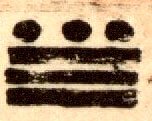

Maya numeral system
Above, it literally says “three fives and three ones,” 5+5+5+3=18. Unlike the Sumerian system with two number symbols, the Maya had a true zero.
The Decimal System
Younger than the previously mentioned systems, it was used in Egypt, Ancient Greece, Rome, and, of course, India. The first to use it were the Egyptians. One is — I, two is — II, three is — III… But ten had its own symbol in the form of an arc. The same applied to a hundred, a thousand, and ten thousand.

Egyptian numerals
The largest number was a million, represented as a person with raised hands.
After reviewing all the ancient systems, it becomes clear how ancient arithmetic developed.